Farm Insurance Coverages Explained Simply — Every Part of the Farm Policy, Plus the Riders (Even a 10-Year-Old Could Follow)

Licensed insurance agent, BNW Services LLC · 40 years in trucking & the trades
We covered the harvest in the Crop Insurance guide. Now let's open up the *other* force field — the farm policy itself, which protects everything on the place except the growing crop. And there's a lot under that one roof.
Imagine you're ten years old on the family farm. A regular homeowners policy protects a *house*. But your farm is a house plus a business plus a fleet of expensive machines plus living, breathing livestock plus land where people work and visit. A farm policy is really several force fields braided into one. Here's every strand — and the riders that patch the holes.
1. The Farm Dwelling (and Your Stuff)
Your house and personal belongings are covered much like standard home insurance — fire, wind, theft, liability for your household. This is the part that feels familiar. Everything below is what a regular home policy *can't* do.
2. Farm Structures (the "Other Buildings" Bucket)
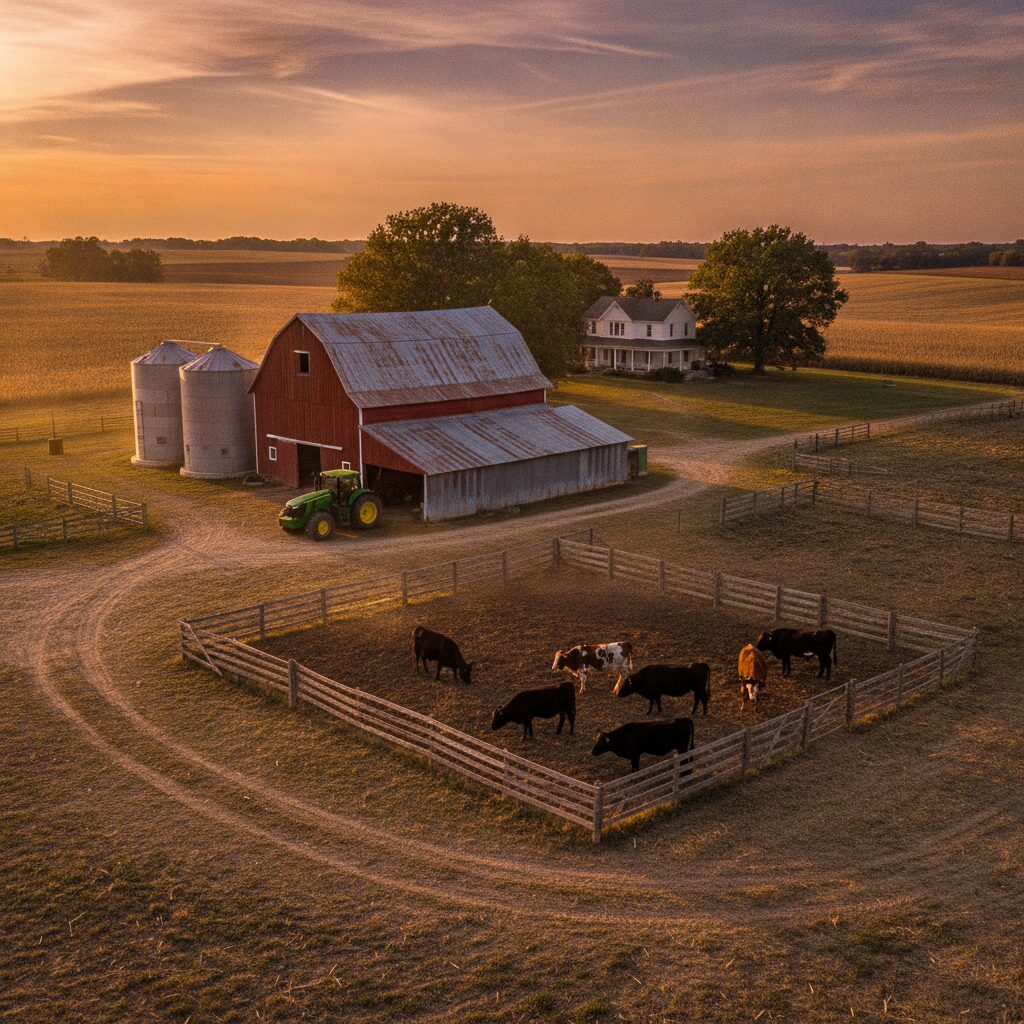
Barns, machine sheds, grain bins, silos, shops, corrals, fences, livestock confinements, and other outbuildings. You insure these two ways:
- Scheduled: list each building with its own value — precise, best for high-value structures.
- Blanket: one pool of coverage spread across all structures — flexible, fewer gaps if you add a shed mid-year.
3. Farm Personal Property (the "Stuff That Runs the Operation")
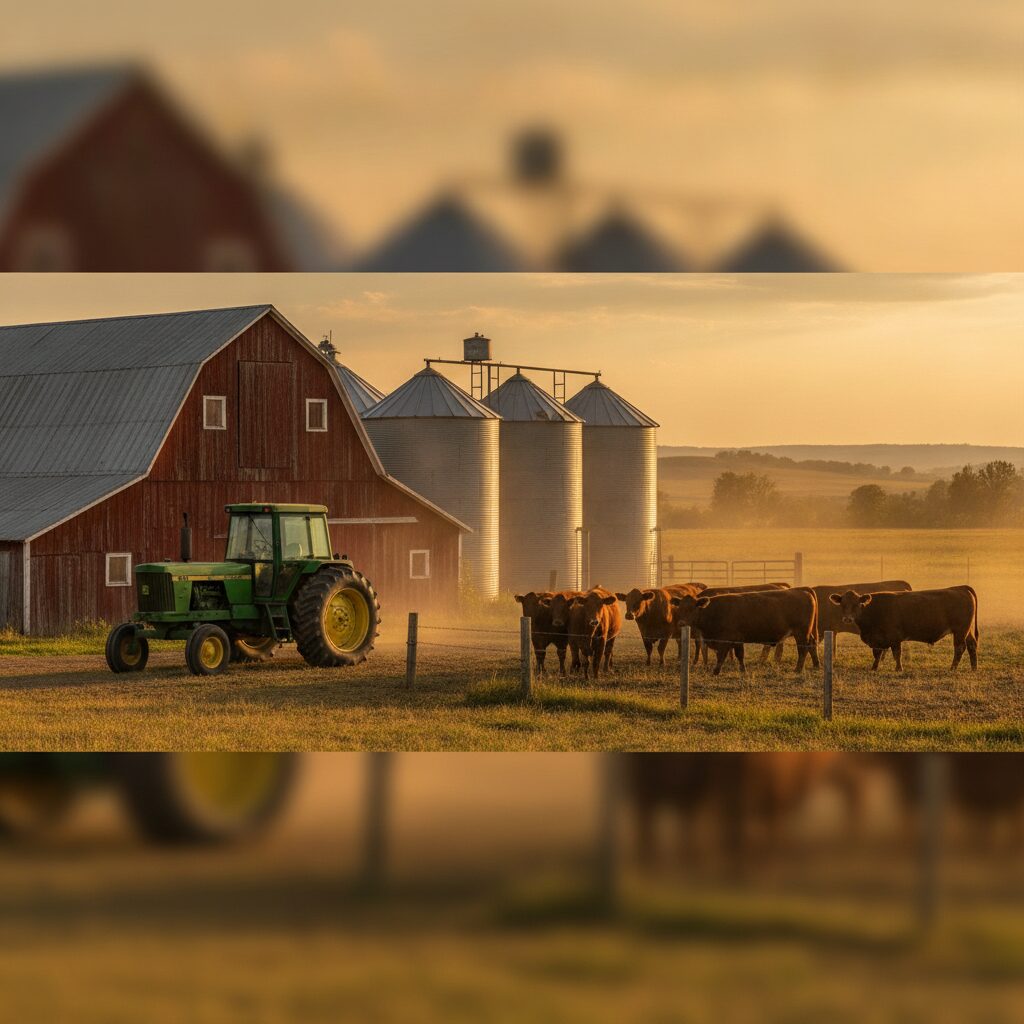
- Machinery & equipment: tractors, combines, planters, balers, implements, tools. Again, scheduled (each big machine listed) or blanket (a pool covering all of it).
- Livestock: cattle, hogs, sheep, poultry, horses — covered for specified perils (lightning, fire, accidental shooting, drowning, transport accidents, sometimes more).
- Feed, seed, fertilizer, chemicals, hay, and harvested grain in storage — the inputs and the stored output.
4. Farm Liability (Bigger Than Home Liability)
A farm draws people and risk a backyard never does:
- Premises liability: a visitor, neighbor, or repair tech gets hurt on your land.
- Products liability: you sell eggs, beef, produce, or hay and someone claims it harmed them.
- Agritourism / U-pick / hunting leases: opening the gate to the public adds real exposure — often needs specific coverage.
- Custom farming: if you do tillage or harvesting *for* neighbors, that work needs liability too.
5. Farm Employees — Workers' Comp
The moment you have hired help, most states require workers' compensation (farm-labor rules vary — check yours). If a worker is injured, comp covers their medical bills and lost wages and protects you. (More on this in the commercial guide.)
6. Equipment in Transit / Off the Farm
Your property coverage usually only protects gear sitting *on your land*. Haul a tractor to leased ground or down the highway and you want inland marine-style coverage so the machine's protected while it travels.
7. Farm Income / Extra Expense
If a covered disaster (say a barn fire) halts part of the operation, this replaces lost income and the extra costs to keep going while you rebuild.
8. The Coverage Choices That Change Everything
- Named-peril vs. Special (open) peril: named-peril covers only listed causes; special peril covers everything except a short exclusion list — broader, worth the upgrade on key property.
- ACV vs. Replacement Cost: Actual Cash Value pays depreciated value; Replacement Cost pays to actually replace it. Choose RCV on buildings and machinery you'd need to rebuild/rebuy.
- Scheduled vs. Blanket: scheduled = precise per-item; blanket = flexible pool. Many farms blend both.
9. Riders & Endorsements (the gap-fillers — cover these!)
The base policy is the frame; riders are the upgrades that match it to *your* operation:
- Livestock mortality / death coverage: broader protection for the death of valuable animals (named-peril or all-risk mortality for high-value breeding stock or horses).
- Equipment breakdown (mechanical): when a grain dryer, irrigation pump, or electrical system *fails mechanically* (not from an outside peril) — a gap standard property leaves open.
- Pollution / spill: fuel, fertilizer, or chemical leaks and the cleanup — usually excluded unless you add it.
- Peak-season / fluctuating inventory: bumps up your coverage on grain or inputs during harvest/storage when values spike.
- Custom farming liability: for doing field work on others' land for hire.
- Manure / environmental & spray-drift: chemical drift onto a neighbor's field is a real, excluded-by-default risk.
- Replacement cost on machinery & scheduled high-value items: so a totaled combine pays out at real-world cost.
- Identity-theft restoration: often a cheap add-on, like on home policies.
10. The Honest Truth
A farm is the most coverage-complex thing most families will ever own — a home, a business, a machine fleet, and a livestock operation in one. A generic homeowners policy leaves enormous gaps (it won't touch your barn, your tractor in the field, your livestock, your products liability, or your hired help). The fix isn't fancy — it's *itemizing the operation honestly* and choosing the right peril form, replacement-cost basis, and riders for how *you* farm.
11. How to Shop Honestly
1. Inventory everything — every structure, major machine, livestock head, and stored input. That's what sizes the policy.
2. Get the peril form right — special (open) peril on the property that matters.
3. Insure at replacement cost on buildings and equipment you'd have to rebuild or rebuy.
4. Match riders to your operation — livestock mortality, equipment breakdown, pollution, custom farming, peak-season — don't leave the gaps open.
5. Carry real liability + workers' comp if you have employees or invite the public in.
6. Use a farm specialist — like us. BNW writes **farm *and* crop directly**, so your buildings, equipment, livestock, liability, *and* harvest can sit under one roof instead of scattered across offices.
If you farm or ranch in Missouri, Kansas, Nebraska, Tennessee, Oklahoma, Arkansas, or Colorado, my agency, BNW Services LLC, can build the whole package. Get a free, no-obligation quote or call 573-594-5148.
References & Media
Citations
- Insurance Information Institute — Farm & ranch insurance
- NAIC — Agricultural & farm insurance basics
- USDA Farmers.gov — Risk management & recovery
- OSHA — Agricultural operations & worker safety
Related Internal Links
- Farm & ranch insurance
- Crop insurance explained simply
- Farm & Crop insurance explained simply (overview)
- Commercial insurance explained simply
Videos
_Video walkthrough pending an enrichment pass._