Crop Insurance Explained Simply — Every Kind, From MPCI to Crop-Hail to Whole-Farm (Even a 10-Year-Old Could Follow)

Licensed insurance agent, BNW Services LLC · 40 years in trucking & the trades
We touched on crop coverage in the Farm & Crop guide, but crop insurance is deep enough — and important enough — to deserve its own full breakdown. So here's the whole menu, plain and simple.
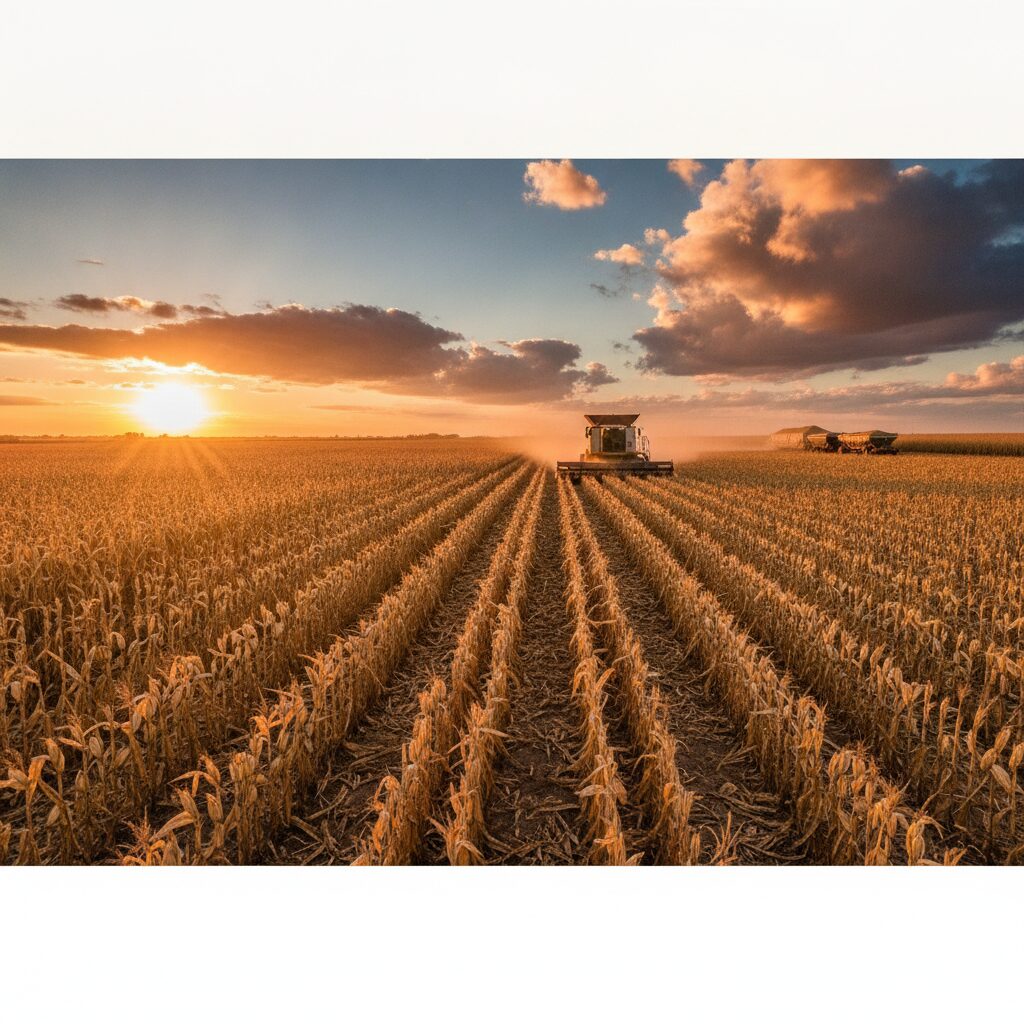
Imagine you're ten years old and every spring you plant a giant garden. You spend your whole allowance on seeds, water, and work. The deal is: you don't find out if you made money until *fall*, when you finally pick everything. But all summer long, a hailstorm, a drought, a flood, or even a price crash could wipe out your bet. Crop insurance is a magic force field for the bet itself — the growing crop in the dirt that no other policy will touch.
Important: your farm policy protects your *barns, equipment, and livestock*. Crop insurance protects the harvest. Two completely different force fields.
1. The Crop Insurance Dictionary
- APH (Actual Production History): your field's "GPA" — the average yield it's produced over recent years. Your coverage is built off this number.
- Coverage Level: how much of your APH you protect, usually 50% up to 85%. Higher level = more protection (and higher premium, but heavily subsidized).
- The Subsidy: here's the wild part — the federal government pays roughly 60% of your crop-insurance premium. It's one of the most subsidized risk tools in all of agriculture.
- Projected Price vs. Harvest Price: crop prices are set off futures markets — a *projected* price in spring and a *harvest* price in fall. Which one your policy uses is a huge deal (see Revenue Protection below).
- Sales Closing Date: the federal deadline to buy or change your policy — *before* planting. Miss it and you're uncovered for the year. This is the trap that burns people.
- AIP & Crop Agent: federal crop insurance is sold by Approved Insurance Providers through licensed crop agents — the government sets the rules and prices; the agent helps you choose.
- RMA / FCIC: the USDA's Risk Management Agency runs the program through the Federal Crop Insurance Corporation.
2. Two Worlds: Federal and Private
- Federal (MPCI — Multi-Peril Crop Insurance): the big, subsidized program for the major perils — drought, flood, hail, freeze, disease, *and* price/revenue drops. This is the backbone.
- Private (Crop-Hail & named peril): add-on policies you buy from private carriers for things like dollar-one hail damage, with no federal deductible.
Most serious operations run both — MPCI for the catastrophic loss, crop-hail to plug the deductible gap.
3. The Federal MPCI Menu (the main event)
This is where the "all kinds" really lives. Same program, different flavors:
| Plan | What it protects | Best for |
|------|------------------|----------|
| Yield Protection (YP) | Your *yield* only (bushels). If you harvest less than your guarantee, it pays — price isn't covered. | Growers who only worry about production, not price |
| Revenue Protection (RP) | Your *revenue* (yield × price), and uses the higher of the projected or harvest price. The most popular plan. | Most row-crop farmers (corn, soybeans, wheat) |
| RP with Harvest Price Exclusion (RP-HPE) | Same as RP but locks in only the projected price — cheaper, but no upside if prices rise by harvest. | Cost-conscious growers who want revenue cover for less |
| Area Risk Protection (ARPI) | Based on your county's average yield/revenue, not your own farm. Area Yield (AYP) or Area Revenue (ARP). | Farms whose results track the county; lower cost |
| Margin Protection (MP) | Your margin — revenue *minus* major input costs (fertilizer, fuel, etc.). | Operations squeezed by rising input prices |
| Whole-Farm Revenue Protection (WFRP) | All the commodities on your farm under one policy, up to a high revenue cap. | Diversified, specialty, and organic farms |
| Dollar / specialty plans | Fixed dollar amounts for crops without a futures price (some fruits, veggies, nursery). | Specialty and niche crops |
The key fork for most farmers is Yield vs. Revenue: YP saves your bushels; RP saves your *income*, even if a price crash is the thing that hurt you.
4. Beyond Row Crops — RMA Covers More Than You'd Think
Crop insurance isn't just corn and beans:
- Pasture, Rangeland & Forage (PRF): uses a rainfall index by grid area — if rainfall in your area falls below normal, it pays, protecting hay and grazing land.
- Livestock Risk Protection (LRP): protects against a drop in *market price* for cattle, swine, or lambs.
- Livestock Gross Margin (LGM): protects the *margin* between livestock value and feed cost.
- Dairy Revenue Protection (DRP): protects against falling milk revenue.
- Specialty, organic, and nursery programs round out the menu.
5. How It Actually Works
1. Your APH sets your yield baseline.
2. You pick a plan (YP/RP/etc.) and a coverage level (50–85%). The higher the level, the bigger the guarantee — and the subsidy softens the premium either way.
3. You choose how to group your acres into units (basic, optional, enterprise, or whole-farm) — this affects price and how losses are counted.
4. If your yield or revenue comes in below the guarantee, you file a claim and the program pays the shortfall.
6. Crop Riders & Endorsements (the add-ons that fill the gaps)
Your base MPCI policy leaves a deductible and some gaps — these riders patch them:
- Supplemental Coverage Option (SCO): a *county-level* band that rides on top of your individual MPCI to help cover part of your deductible. Subsidized, and a popular way to buy "up" affordably.
- Enhanced Coverage Option (ECO): goes even higher than SCO — covers "shallow" losses in roughly the 86–95% band, where your main policy stops.
- Prevented Planting: built into MPCI — if weather (flood, relentless rain, drought) keeps you from planting at all by the deadline, this pays a share of your guarantee.
- Replant Coverage: pays toward the cost of replanting when an early-season loss wipes out a stand and there's time to try again.
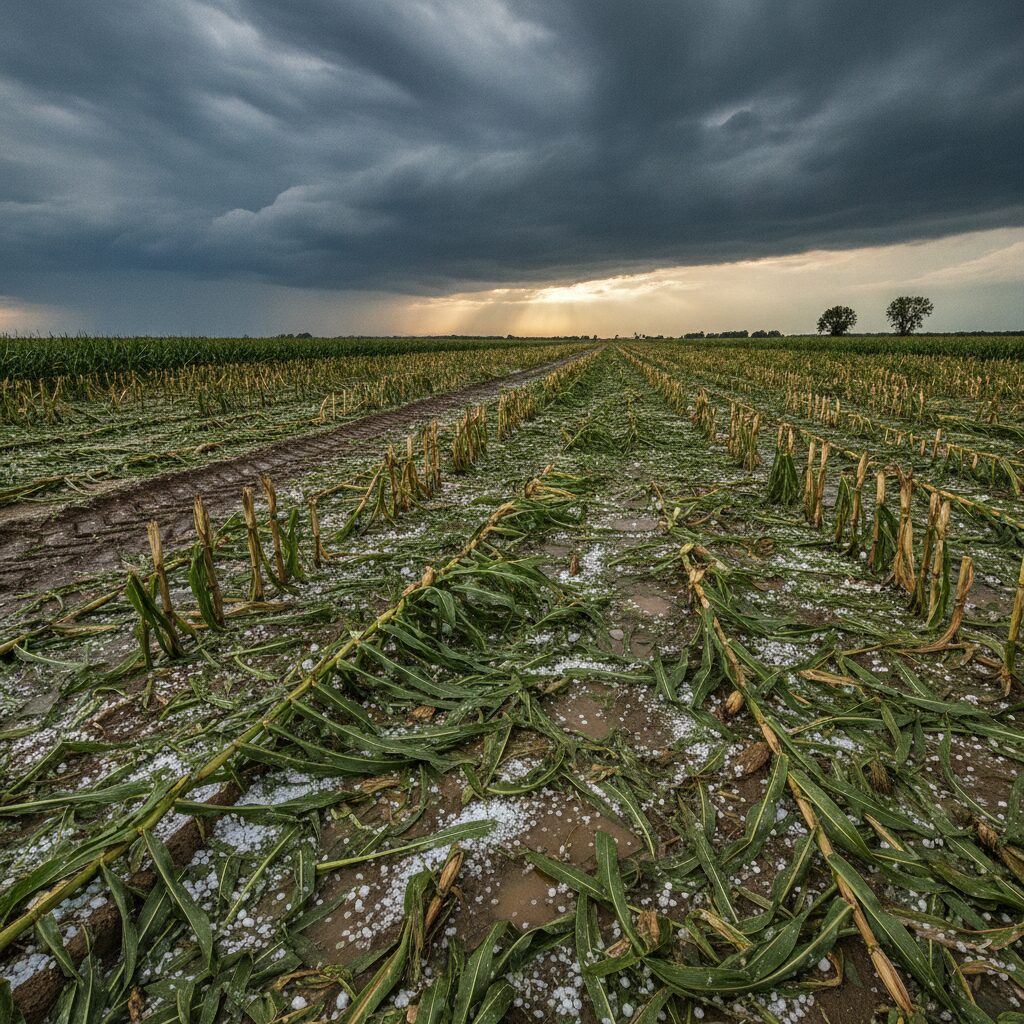
- Crop-Hail (private add-on): dollar-one hail (and often fire) with *no* federal deductible — the classic supplement to MPCI, because hail can flatten a field in minutes.
- Hurricane Insurance Protection–Wind Index (HIP-WI): for hurricane-exposed regions, pays off a wind index when a named storm hits (more relevant on the coasts than our footprint, but worth knowing it exists).
- Margin Protection (as an elected add-on): layers margin (revenue minus input cost) coverage onto your plan.
The smart play for most operations: a solid Revenue Protection base, SCO/ECO to shrink the deductible, and crop-hail for the dollar-one hail risk.
7. The Honest Truth
- Federal crop insurance is a genuinely good deal *because* it's subsidized — the taxpayer covers a big slice of the premium, so the protection per dollar is strong.
- Pair MPCI with crop-hail. MPCI deductibles can be steep, and hail can flatten a field in ten minutes — dollar-one crop-hail plugs that gap.
- The deadlines are unforgiving. This isn't like home insurance you can buy anytime — you must act before the sales closing date for your crop and county. Mark it.
- It's specialized — federal crop is sold through RMA-approved providers and crop agents, so the right specialist matters.
8. How to Shop Honestly
1. Know your sales closing dates. Get your plan set *before* planting — this is the whole ballgame.
2. Pick Yield vs. Revenue deliberately. If a price crash would hurt you, you want Revenue Protection.
3. Consider WFRP if you're diversified, specialty, or organic — one policy can cover the whole operation.
4. Add crop-hail if hail is a real threat where you farm.
5. Work with a crop specialist — like us. BNW writes crop insurance *directly* through our appointed crop markets, so we can build your federal MPCI, add crop-hail, and fit it all alongside your farm policy under one roof — no getting bounced between offices.
If you farm in Missouri, Kansas, Nebraska, Tennessee, Oklahoma, Arkansas, or Colorado, my agency, BNW Services LLC, can help you protect the whole operation — buildings, equipment, livestock, and harvest. Get a free, no-obligation quote or call 573-594-5148.
References & Media
Citations
- USDA Risk Management Agency — Crop insurance plans & programs
- USDA Farmers.gov — Crop insurance & risk management
- RMA — Whole-Farm Revenue Protection (WFRP)
- RMA — Pasture, Rangeland, Forage (PRF)
- RMA — Important dates & deadlines
Related Internal Links
- Crop insurance
- Farm & ranch insurance
- Farm & Crop insurance explained simply
- Commercial insurance explained simply
Videos
_Video walkthrough pending an enrichment pass._