Article Floaters Explained Simply — Scheduling Your Valuables, the Deep Version (Even a 10-Year-Old Could Follow)

Licensed insurance agent, BNW Services LLC · 40 years in trucking & the trades
If you've followed our Explained Simply series, you know your homeowners or renters policy is a force field for your stuff. But here's a secret that catches people at the worst possible moment: that force field has a velvet rope around your most valuable things. Your everyday couch and TV get the full treatment — but your engagement ring, your grandpa's gun collection, and your camera gear are quietly capped and only covered for a *few* kinds of bad luck.
An article floater (also called scheduled personal property) is the VIP pass that lifts the velvet rope — full value, broader protection, anywhere in the world. This is the deep dive.
The Big Idea: Lifting the Velvet Rope
Imagine you're ten years old with a backpack full of toys, and your mom promises to replace anything that breaks. Great deal — until you read the fine print: *"Replacements for special toys (like your limited-edition action figure) are capped at $20, and only if it's stolen — not if you lose it."* Your $200 action figure just became a $20 toy in the eyes of the rules.
That's exactly what your home policy does to valuables. An article floater says: *"This specific item, appraised at its real value, gets covered for almost anything that happens to it — including simply losing it — for the full amount, with little or no deductible."*
Why Your Home or Renters Policy Falls Short (the three gaps)
Gap 1 — Sub-limits. Standard home policies cover your belongings, but put special low caps on certain categories. Typical examples (yours vary by policy): jewelry & watches capped around $1,000–$1,500 for theft, plus low caps on furs, firearms, silverware, cash, coins, and stamps. Lose a $12,000 ring to a burglar and the base policy might hand you $1,500.
Gap 2 — Limited perils. Your stuff is covered only for named perils (fire, theft, etc.). The most common way to lose a ring — it slips off and vanishes down a drain, or you just *can't find it* — is "mysterious disappearance," and a standard policy does not cover it. A floater does.
Gap 3 — Actual Cash Value & deductibles. The base policy may pay depreciated value and make you eat your deductible. Floaters typically pay agreed value with a $0 (or tiny) deductible.
The Floater Dictionary
- Scheduled Personal Property: listing a specific item (with its value) for its own coverage — the heart of a floater.
- Sub-limit: the low cap your base policy puts on a category (jewelry, guns, etc.).
- Appraisal: a professional valuation (or a detailed receipt) that sets the item's worth.
- Agreed Value: you and the insurer agree on the payout up front — no depreciation fight, no haggling at claim time.
- All-Risk / Open Peril: covered for *everything* except a short exclusion list — far broader than named-peril.
- Mysterious Disappearance: the item is simply *gone* with no explanation — covered on a floater, excluded on standard home insurance.
- Inland Marine: the insurance family floaters live in (it covers valuable, *portable* property — your ring travels with you, so it needs "floating" coverage that follows it anywhere).
What You Can Float (the list is long)
Almost any valuable, portable item:
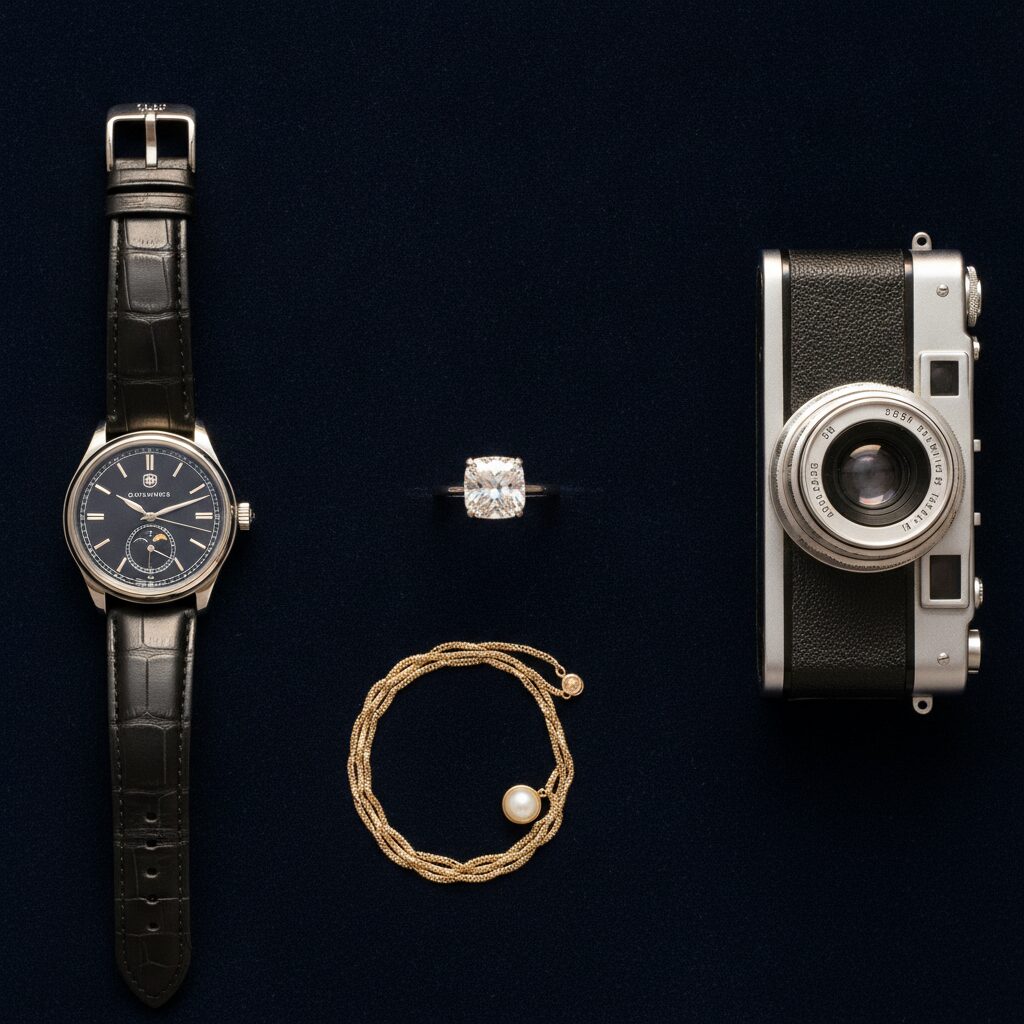
- Jewelry & engagement rings (the #1 floater)
- Watches (luxury/heirloom)
- Fine art & antiques
- Firearms & gun collections
- Musical instruments (and the gigging musician's gear)
- Cameras & photography/video equipment
- Furs
- Coins, stamps, trading cards & collectibles
- Silverware & fine china
- Wine & spirits collections
- Sports & hobby gear (golf clubs, high-end bicycles, archery)
- Electronics & computers beyond normal limits
- Medical devices (hearing aids, mobility equipment)
- Memorabilia and other treasures
Scheduled vs. Blanket — two ways to float
- Scheduled (itemized): you list each piece, usually with an appraisal or receipt, set an agreed value, and get the broadest all-risk coverage (including mysterious disappearance), typically $0 deductible, worldwide. Best for high-value, irreplaceable items.
- Blanket: a single pool of coverage for a *category* (say, "all jewelry up to $25,000 with a $5,000 per-item cap") — no itemizing, more flexible, but with per-item limits and sometimes a deductible. Good for many smaller pieces you don't want to schedule one by one.
Many people blend both: schedule the big rocks and the heirlooms; blanket the rest.
How a Floater Actually Works
1. Document the item — get a professional appraisal (for jewelry/art) or keep the receipt for newer purchases.
2. Schedule it — your agent adds the item and its value to your policy (often as an endorsement on your home/renters policy, or as a stand-alone valuables policy).
3. Agreed value is set — so if it's lost, stolen, or destroyed, you get the agreed amount, no depreciation argument.
4. Coverage follows the item — at home, on vacation, in the hotel safe, anywhere in the world.
5. Claim with little friction — typically no deductible and broad "all-risk" perils, *including* mysterious disappearance.
What's Still Excluded
Even a floater won't cover everything:
- Wear and tear, gradual deterioration, and "inherent vice" (a thing slowly falling apart on its own).
- Intentional damage and fraud.
- War, nuclear, and government seizure.
- Market-value swings — if your art or coin simply drops in market value, that's not a covered "loss" (though an inflation/appreciation endorsement can adjust your *insured* value).
Riders & Endorsements Worth Adding
- Agreed Value endorsement — lock the payout (default on most floaters, but confirm it).
- Inflation / Market Appreciation — periodically bumps the insured value of art, jewelry, or collectibles that rise in worth (re-appraise every few years).
- Breakage coverage — for fragile items (fine china, glass art, instruments) where accidental breakage might otherwise be limited.
- Pairs & Sets — fair treatment if you lose *one* of a matched pair (earrings, a set of collectibles).
- Newly Acquired Property grace period — auto-covers a new purchase for a window (e.g., 30–90 days) before you formally schedule it — huge for that surprise ring or new camera.
- Worldwide coverage — confirm it travels (most floaters do).
The Honest Truth
- Floaters are cheap relative to the value they protect — pennies on the dollar for peace of mind on something irreplaceable.
- Mysterious disappearance is the whole point for jewelry — it's the single most common way rings are lost, and only a floater covers it.
- Agreed value beats a claim-time argument — settle the number when everyone's calm, not after a loss.
- Re-appraise periodically — gold, art, and collectibles appreciate; an old appraisal can leave you underinsured.
- You can't float what you can't document — keep appraisals, photos, and receipts.
If you own jewelry, a gun collection, fine art, instruments, cameras, or any treasure worth more than your home policy's cap, in Missouri, Kansas, Nebraska, Tennessee, Oklahoma, Arkansas, or Colorado, my agency, BNW Services LLC, can schedule it properly with agreed value and worldwide, all-risk protection. Get a free, no-obligation quote or call 573-594-5148.
References & Media
Citations
- Insurance Information Institute — Insuring jewelry & other valuables
- NAIC — Homeowners coverage & scheduled property
- III — What is a personal articles floater?
- FTC Consumer Advice — Keeping a home inventory
Related Internal Links
- Jewelry & article floater coverage
- Homeowners insurance
- Renters insurance explained simply
- Home insurance explained simply
Videos
_Video walkthrough pending an enrichment pass._